
A commercial AV integrator designs, installs, programs and supports audiovisual systems so that displays, cameras, microphones, audio processing, control and the network work as one system. Standards bodies such as AVIXA define parts of that engineering; the integrator is accountable for the whole room working.
On this page
- What is a commercial AV integrator?
- How is an AV integrator different from an installer or reseller?
- What does an AV integrator do on a project?
- What engineering decisions does an integrator make?
- Why does professional AV integration matter for hybrid work?
- How do you choose a commercial AV integrator?
- Frequently asked questions
- References
What is a commercial AV integrator?
A commercial AV integrator is a company that takes responsibility for designing and delivering complete audiovisual systems for business environments — conference rooms, boardrooms, training spaces, lobbies and town halls — and supporting them afterward.
The word "integrator" is the point. A room contains products from several manufacturers, a conferencing platform and the organization's network. Each works on its own; the integrator makes them work together, documents how, and stays accountable when something changes. That is what commercial AV integration means in practice.
How is an AV integrator different from an installer or reseller?
A reseller delivers equipment, an installer mounts and cables what someone else specified, and an integrator owns the whole result: design, equipment selection, installation, programming, commissioning and support.
| Responsibility | Equipment reseller | Installer | Commercial AV integrator |
|---|---|---|---|
| Needs analysis and room design | No | Rarely | Yes |
| Equipment selection | Catalog-based | No (follows spec) | Yes, to the design |
| Mounting and cabling | No | Yes | Yes |
| DSP tuning and control programming | No | Sometimes | Yes |
| Commissioning and documentation | No | Limited | Yes |
| Ongoing service and updates | Warranty only | Rarely | Yes, under agreement |
What does an AV integrator do on a project?
On a typical project an integrator moves through discovery, site assessment, design, engineering, procurement, installation, programming, commissioning, training and support. Each phase produces something the next depends on.
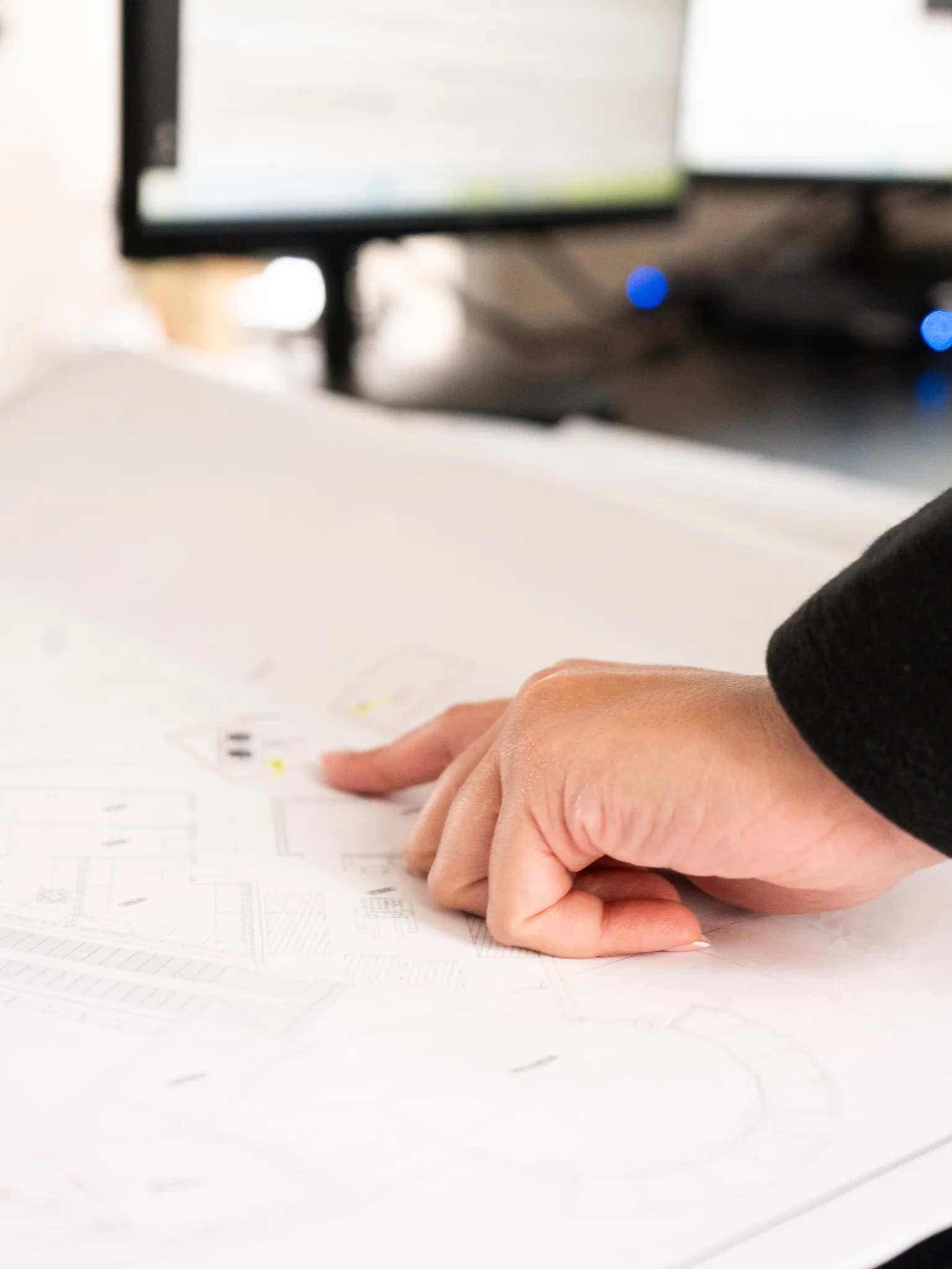
The integration process
- Discovery: how the organization meets, which platform it uses, room counts, IT requirements and budget.
- Site assessment: dimensions, sightlines, acoustics, lighting, power, cable paths and building rules.
- Design: room standards, drawings, equipment schedules and a validated budget.
- Engineering: rack layouts, cable schedules, mounting details and network requirements.
- Procurement: equipment ordered against the design and the construction schedule.
- Installation: mounting, cabling, termination and rack build.
- Programming: control logic, DSP tuning, camera presets and platform provisioning.
- Commissioning: every source, seat and failure mode tested and documented.
- Training and support: user training, IT handover and a service agreement.
What engineering decisions does an integrator make?
The decisions that determine whether a room works: display size for the farthest seat, camera position, microphone coverage, echo cancellation, speaker placement, control design and network configuration.
Display sizing follows AVIXA's DISCAS method, which sizes images by viewing distance and content type rather than wall space. Audio depends on acoustic echo cancellation, which Biamp's documentation describes as removing echo that occurs naturally in teleconferencing using a reference of the far-end signal. Hardware is chosen from certified lists — Microsoft notes its certification program tests security, audio and video quality and accessibility. Networks are planned to platform guidance such as Microsoft's bandwidth recommendations for Teams.
Common failures an integrator prevents
- A display too small for the back of the room
- A camera mounted above a large display, looking down on the table
- Remote participants hearing their own voices echo back
- Microphones that miss the far end of the table
- Conferencing devices blocked by network or security policy
- Every room with a different interface
Why does professional AV integration matter for hybrid work?
Because the remote participant's experience is set by the room's engineering. Microsoft's 2022 Work Trend Index found many remote and hybrid employees do not feel included in meetings, and most leaders were redesigning spaces for hybrid work.
Microsoft's Work Trend Index 2022 reported that 43% of remote employees and 44% of hybrid employees did not feel included in meetings, and that 54% of leaders were redesigning or planning to redesign meeting spaces for hybrid work. Inclusion in a meeting is largely a question of whether people can be seen and heard — which is camera placement, microphone coverage and audio processing.
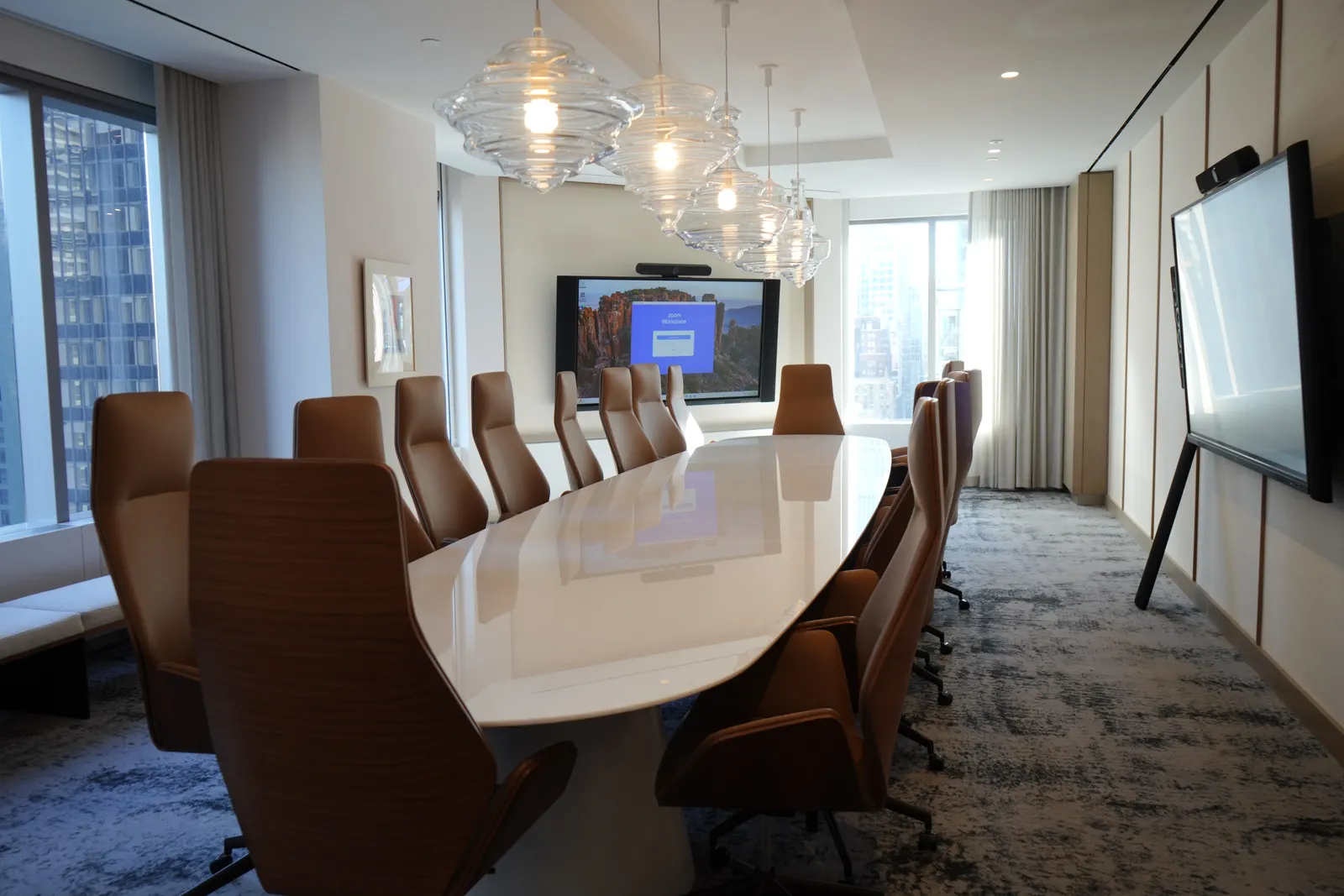
How do you choose a commercial AV integrator?
Ask whether they design before they sell, how they work with your IT team, whether they can standardize multiple rooms, how they commission, and what support looks like after handover. Ask to see comparable projects.
Questions to ask
- Will you produce drawings and a validated budget before we buy equipment?
- How do you coordinate network, security and licensing with our IT team?
- Can you define room standards and deploy them across our office?
- What does your commissioning checklist cover?
- Can you work in our building's rules — COIs, freight, after-hours?
- What service agreement options do you offer after handover?
- Can we see comparable projects?
Frequently Asked Questions
Do I need an AV integrator for a single conference room?
Not always. A small huddle room with a certified video bar and a correctly sized display can be simple. Once a room needs separate cameras, ceiling microphones, a DSP, control or network coordination, or once you have several rooms to keep consistent, an integrator's design and commissioning usually prevent the problems that cost more to fix later.
What is the difference between AV integration and IT?
IT manages the network, identity, security and devices across the organization. AV integration designs and delivers the room systems — displays, cameras, audio, control — that run on that infrastructure. Modern conferencing devices are network devices, so the two teams work together on VLANs, PoE, quality of service and account provisioning.
Does an AV integrator sell equipment?
Usually, yes — but as part of a designed system, not as the product. The integrator specifies equipment to meet the design, procures it against the project schedule and takes responsibility for making it work together. Some organizations engage design only and procure separately.
What is AV commissioning?
Commissioning is the structured testing and adjustment of an installed system to verify it performs as designed: every source, display, camera, microphone, control function and failure mode. It includes DSP tuning, test calls and as-built documentation. A system can be fully installed and still not commissioned.
Can an AV integrator work with our architect and general contractor?
Yes, and it is best when they do. The integrator supplies AV requirements for construction documents — backing, conduit, power, data and ceiling coordination — attends coordination meetings and manages the AV scope during construction so the infrastructure is built correctly the first time.
How long does commercial AV integration take?
It depends on scope. A single small room can be installed in a day once equipment and access are ready. Multi-room deployments and build-outs run for weeks and follow the construction schedule. Design, equipment lead times and building access typically drive the timeline more than installation itself.
What should an AV support agreement include?
A useful AV support agreement defines preventive maintenance visits, remote monitoring, firmware and platform updates, help-desk access and on-site response terms. It should cover every room under one agreement, name what counts as a critical room, and include documentation so your IT team can resolve simple issues internally.
An integrator owns the outcome
A commercial AV integrator is the party accountable for rooms that work: engineered to published standards and platform guidance, installed and commissioned properly, and supported as software and hardware change.
If you are evaluating integrators for a New York office, we are happy to walk through how we would approach your rooms.
References
- Display Image Size for 2D Content in Audiovisual Systems — AVIXA
- Learn More About Display Size — AVIXA
- AEC in Tesira — Biamp
- Teams Rooms certified systems and peripherals — Microsoft Learn
- Prepare your organization's network for Microsoft Teams — Microsoft Learn
- Great Expectations: Making Hybrid Work Work (Work Trend Index 2022) — Microsoft WorkLab
References verified and re-checked at each scheduled review. Read our editorial policy.